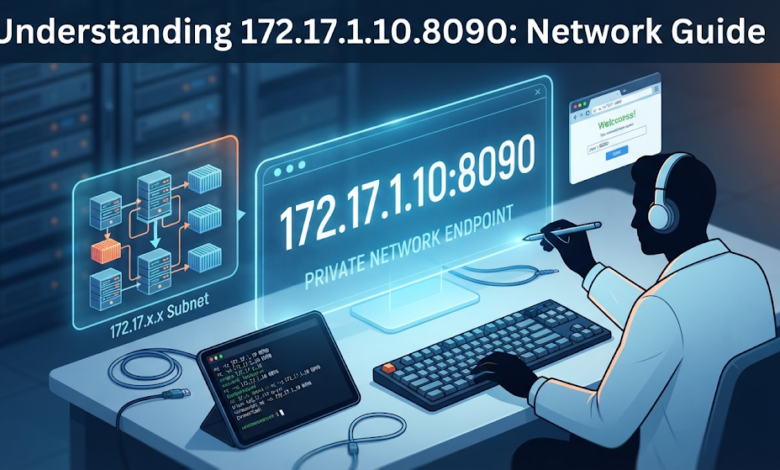
Running into an unfamiliar network string like 172.17.1.10.8090 can feel confusing at first glance. You might spot this sequence in a configuration file, error log, or container dashboard and wonder how to connect to it. Rather than being a single, continuous string, this notation typically combines a private IPv4 address with a specific TCP port.
Understanding how these internal endpoints function is essential for developers, system administrators, and tech enthusiasts managing local environments. In this guide, we will break down what this address means, how to format it properly, and how to troubleshoot common connectivity roadblocks.
Anatomy of the Address: IP vs. Port
At its core, 172.17.1.10.8090 blends two distinct networking components into one shorthand label. Misinterpreting the separators is the most common reason connection attempts fail.
- The IPv4 Host (
172.17.1.10):This is a private IP address belonging to a reserved block.It identifies a specific virtual machine, container, or local device within an isolated network. - The TCP Port (
8090): This numerical suffix specifies the communication channel or port where a web service, API, or dashboard is listening.
Why the Dot Notation Fails in Browsers
If you copy and paste the dotted format directly into a web browser, it usually results in a DNS error or page load failure. Browsers require a colon to separate the host address from the port.
Quick Tip: Always format the endpoint using standard network syntax (
172.17.1.10:8090) when entering it into a browser address bar, API client, or configuration script.
Common Use Cases in Local Environments
Private IP addresses combined with custom ports frequently pop up during software development and container management.
- Containerized Applications: Platforms like Docker frequently assign internal bridging subnets (such as
172.17.x.x) to running containers, while services inside those containers map to ports like8090. - Local Development Servers: Developers testing web applications, internal dashboards, or microservices often bind them to private loopback or bridge interfaces.
- CI/CD Test Pipelines: Automated testing environments use isolated network ranges to simulate production deployments safely away from the public internet.
Troubleshooting Connection Errors
When a service at 172.17.1.10.8090 refuses to load, diagnosing the root cause requires a systematic approach. Here is how to isolate the issue:
- Verify the Syntax:Ensure you are using a colon (
:) rather than a dot (.) before the port number. - Test TCP Connectivity: Run a quick command-line check to see if the port is reachable:
- Linux/macOS:
nc -vz 172.17.1.10 8090 - Windows PowerShell:
Test-NetConnection 172.17.1.10 -Port 8090
- Linux/macOS:
- Check Service Binding: If the port test fails, verify that the application is actively running inside the container or host and bound to the correct network interface rather than just
localhost. - Review Firewall and Routing Rules:Confirm that your local firewall, VPN state, or Docker bridge settings are not blocking internal traffic.
Frequently Asked Questions
Is 172.17.1.10.8090 a public internet address?
No. The IP address 172.17.1.10 falls within private IPv4 address ranges. It is designed exclusively for internal local networks and cannot be routed directly across the public internet.
Why am I getting a “Connection Refused” error?
A connection refused response usually means the target host is online, but no active application is listening on port 8090, or a firewall is actively rejecting the incoming packet.
Can I access this address from another computer?
Only if the second computer shares a direct network route (such as through a VPN, local subnet, or specialized container network configuration) to the host machine.
Conclusion
Navigating internal network identifiers like 172.17.1.10.8090 becomes straightforward once you separate the private IPv4 host from its TCP port. By utilizing proper syntax, verifying your container bindings, and testing connectivity through standard command-line tools, you can resolve configuration hurdles quickly.
To dive deeper into container networking, explore our related guides on Docker bridge configurations and advanced local troubleshooting techniques.