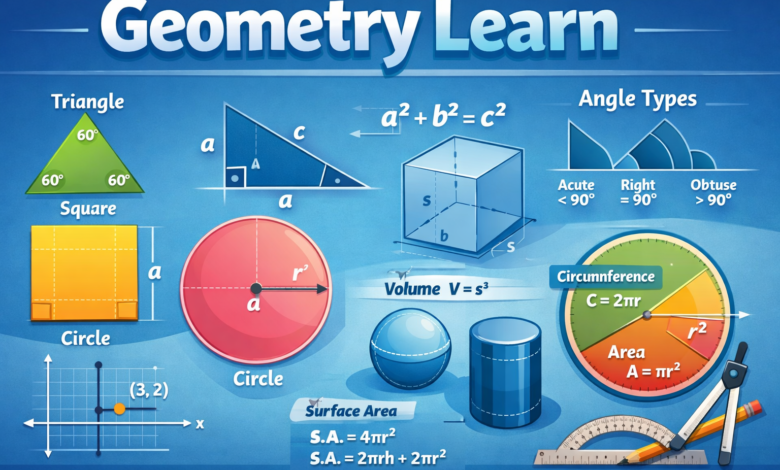
Geometry Learn V3: The Ultimate Interactive Math Learning Platform
Geometry Learn V3 is reshaping how students engage with spatial reasoning, problem‑solving, and mathematical visualization in digital environments. As classrooms evolve toward interactive and adaptive learning ecosystems, platforms that transform abstract geometry into dynamic, visual experiences are becoming essential rather than optional.
This comprehensive guide explores how Geometry Learn V3 works, who it serves, and why it is rapidly gaining traction among educators, students, and digital curriculum designers. From conceptual mastery to gamified practice, this platform represents a new era of geometry education built for modern learners.
The Evolution of Digital Geometry Education
Geometry instruction has historically relied on static diagrams, textbook exercises, and manual proofs. While foundational, these approaches often limited students’ ability to visualize transformations, spatial relationships, and real‑time problem modeling.
Geometry Learn V3 represents the next phase of digital evolution by embedding manipulatives, simulations, and interactive proofs directly into lessons. This shift transforms geometry from a memorization subject into an exploratory learning experience.
What Geometry Learn V3 Is and How It Works
Geometry Learn V3 is an interactive geometry learning platform designed to teach shapes, theorems, measurements, and spatial logic through visual engagement. It combines curriculum‑aligned instruction with digital modeling tools.
Students manipulate angles, rotate figures, test congruence, and construct proofs within guided modules. This hands‑on structure accelerates comprehension while reinforcing theoretical understanding.
Core Learning Philosophy Behind the Platform
The platform is built on experiential learning principles, where students learn by doing rather than passively consuming content. Visual experimentation strengthens retention and conceptual clarity.
By connecting algebraic reasoning with geometric visualization, Geometry Larn V3 supports cross‑disciplinary thinking essential for advanced mathematics.
Interface Design and User Experience
The interface prioritizes clarity, minimizing clutter while emphasizing interactive canvases and tool panels. Navigation flows naturally between lessons, exercises, and performance dashboards.
Students spend less time searching for tools and more time solving problems, which improves engagement and session duration.
Curriculum Alignment and Academic Standards
Geometry Larn V3 aligns with national and state mathematics standards, ensuring compatibility with formal school curricula. Teachers can integrate modules directly into lesson plans.
This alignment makes the platform suitable for classroom instruction, homework reinforcement, and standardized test preparation.
Interactive Tools and Manipulatives
Digital compasses, protractors, rulers, and transformation tools allow students to construct and analyze figures precisely. These tools replicate physical geometry kits in a virtual environment.
Manipulatives respond in real time, enabling learners to test hypotheses and observe immediate outcomes.
Visualization and Spatial Reasoning Development
Visualization remains one of geometry’s most challenging cognitive skills. Geometry Learn V3 strengthens this ability through 3D modeling and animated transformations.
Students can rotate solids, dissect cross‑sections, and explore symmetry dynamically, deepening spatial intelligence.
Gamification and Engagement Mechanics
Gamified elements such as achievement badges, progress levels, and timed challenges sustain learner motivation. Students perceive progress as both academic and experiential.
Healthy competition and milestone tracking increase completion rates and voluntary practice time.
Adaptive Learning Technology
Geometry Learn V3 uses adaptive algorithms to adjust difficulty based on student performance. Struggling learners receive scaffolded support, while advanced students encounter enriched challenges.
This personalization ensures no learner is left behind or under‑challenged.
Assessment and Performance Tracking
Built‑in assessments evaluate conceptual understanding, procedural accuracy, and proof logic. Teachers access real‑time analytics dashboards.
Performance insights help educators identify misconceptions early and intervene strategically.
Teacher Instructional Support
Educators receive lesson templates, guided activities, and assessment banks. These resources reduce planning time while maintaining rigor.
Professional development modules help teachers maximize Geometry Learn V3 in blended classrooms.
Student Collaboration Features
Collaborative whiteboards and peer problem‑solving spaces enable group exploration. Students can co‑construct proofs and critique reasoning.
This social learning layer strengthens communication and mathematical argumentation skills.
Accessibility and Inclusive Learning
Accessibility tools include screen reader compatibility, adjustable contrast, and captioned tutorials. These features ensure equitable participation.
Universal design principles allow diverse learners to engage meaningfully with geometry content.
Mobile and Cross‑Device Compatibility
Geometry Learn V3 operates across desktops, tablets, and mobile devices. Students can continue lessons outside traditional classrooms.
Cloud synchronization ensures progress tracking remains seamless across devices.
Data Security and Privacy Infrastructure
Student data protection is embedded within the platform’s architecture. Encryption safeguards academic records and login credentials.
Compliance with educational privacy regulations ensures institutional trust.
Comparing Geometry Learn V3 to Traditional Learning Methods
| Feature | Geometry Learn V3 | Textbook Learning | Static eLearning |
| Interactivity | High | None | Low |
| Visualization | Dynamic 3D | Static Images | Limited |
| Adaptive Learning | Yes | No | Rare |
| Engagement Level | High | Moderate | Moderate |
| Real‑Time Feedback | Instant | Delayed | Limited |
Real Classroom Implementation Scenarios
Schools implementing Geometry Learn V3 report higher engagement during geometry units. Students participate more actively in demonstrations.
Hybrid classrooms use the platform to bridge in‑person and remote learners through shared digital workspaces.
Impact on Student Achievement
Interactive modeling improves theorem comprehension and proof construction accuracy. Students demonstrate stronger retention on cumulative assessments.
Visual learners, in particular, benefit from the platform’s simulation‑driven instruction.
Common Misconceptions About Digital Geometry Tools
Some educators fear technology may replace foundational reasoning. In reality, Geometry Learn V3 reinforces logic through guided exploration.
The platform complements traditional instruction rather than replacing mathematical rigor.
Integration With Broader EdTech Ecosystems
Geometry Learn V3 integrates with learning management systems, gradebooks, and classroom analytics tools. This ensures workflow continuity.
Single sign‑on access simplifies onboarding for districts and institutions.
Future Innovations and Roadmap Potential
Emerging developments may include AI proof validation, augmented reality modeling, and predictive mastery analytics. These innovations would further personalize learning.
The platform’s scalable architecture positions it for continuous technological evolution.
Strategic Value for Schools and Districts
District leaders view Geometry Learn V3 as both an instructional and analytics asset. It supports curriculum delivery while generating performance insights.
This dual value strengthens ROI in digital education investments.
Expert Perspective on Interactive Math Learning
“Students understand geometry best when they can see it move, transform, and respond to their thinking.”
This perspective underscores why platforms like Geometry Learn V3 are redefining conceptual mathematics instruction.
Best Practices for Maximizing Learning Outcomes
Teachers should blend direct instruction with exploratory platform sessions. This balance reinforces theory through application.
Regular analytics reviews help educators adjust pacing and intervention strategies.
Conclusion
Geometry Learn V3 stands at the intersection of visualization, interaction, and adaptive instruction. By transforming static geometry into a living digital experience, it empowers students to explore mathematics with confidence and curiosity.
As education continues shifting toward immersive learning environments, platforms that merge rigor with engagement will define academic success. Geometry Learn V3 exemplifies this transformation, offering schools a scalable pathway to deeper mathematical understanding.
Frequently Asked Questions
What is Geometry Learn V3?
Geometry Learn V3 is an interactive digital platform designed to teach geometry through visualization, simulations, and adaptive practice.
Who can use Geometry Learn V3?
Geometry Learn V3 is used by students, teachers, schools, and independent learners seeking structured geometry instruction.
Does Geometry Learn V3 align with school curricula?
Yes, Geometry Learn V3 aligns with academic standards, making it suitable for classroom and supplemental learning.
Can Geometry Learn V3 improve test performance?
Consistent practice and visualization within Geometry Learn V3 can strengthen conceptual mastery and assessment outcomes.
Is Geometry Learn V3 accessible on mobile devices?
Geometry Learn V3 supports cross‑device access, enabling learning on tablets and smartphones.