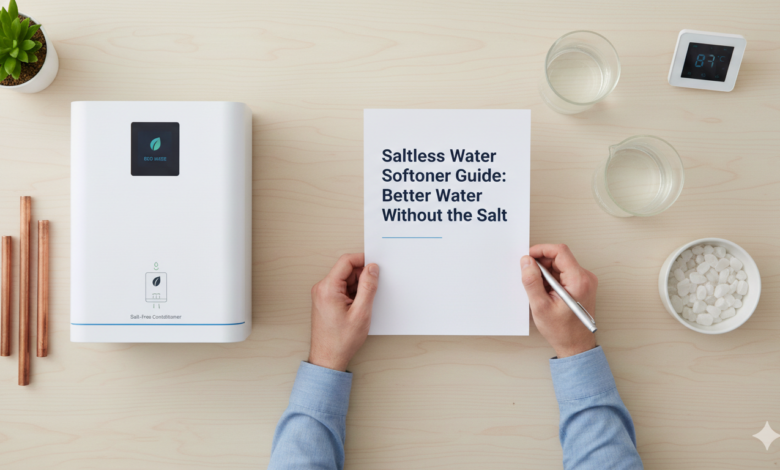
If you are tired of lugging heavy bags of salt into your basement every month, you are not alone. Many homeowners are looking for a better way to handle hard water. A saltless water softener, which is technically known as a water conditioner, offers a clever alternative. Unlike traditional systems that use chemicals to swap minerals, these systems use a process called Template Assisted Crystallization (TAC). This sounds fancy, but it just means the system changes how minerals behave so they cannot stick to your pipes.
I remember helping a friend install one of these last summer. He was worried about the “slimy” feeling of traditional softened water. After we finished the setup, he was thrilled. His water felt natural, but his coffee maker stopped getting that white crusty buildup. It is a great middle-ground solution for people who want to protect their plumbing without adding extra sodium to their diet or the environment.
How Does Salt-Free Technology Actually Work?
To understand a saltless water softener, you have to look at the science of crystals. In a standard softener, calcium and magnesium are physically removed and replaced with salt. In a salt-free system, those minerals stay in the water. However, as the water passes through a special ceramic media, the minerals are transformed into tiny, microscopic crystals. These crystals are stable and do not want to grab onto your showerheads or heating elements.
Think of it like a magnet that has been deactivated. The mineral is still there, but it has lost its “stickiness.” Because nothing is being added or removed, the chemical balance of your water remains the same. This is why many people prefer it; you keep the healthy minerals like calcium, but you lose the headache of scale buildup. It is a smart, low-maintenance way to keep your home running smoothly.
Comparing Systems: Saltless Water Softener vs. Traditional Softener
| Feature | Saltless Water Softener | Traditional Salt Softener |
| Main Goal | Prevents scale buildup | Removes minerals entirely |
| Maintenance | Very low (Change filter yearly) | High (Add salt monthly) |
| Water Feel | Natural and crisp | “Slippery” or “Slimy” |
| Waste | Zero wastewater | Discharges brine into sewers |
| Electricity | Usually none required | Requires power for regeneration |
| Space Needed | Small footprint | Large tanks and brine tank |
Why Choose a Saltless Water Softener for Your Home?
The biggest reason people switch to a saltless water softener is simplicity. Life is busy enough without having to remember to buy 40-pound bags of salt at the hardware store. Since these systems do not have a “regeneration” cycle, they do not waste a single drop of water. This makes them a very eco-friendly choice for families who care about their local environment and water bill.
Another hidden benefit is for people on low-sodium diets. Traditional softeners add a small amount of salt to your drinking water. While it is not a huge amount, it can add up. With a saltless water softener, your water stays exactly as nature intended, just without the destructive scaling properties. It protects your expensive appliances like your dishwasher and water heater while keeping your drinking water pure and salt-free.
The Big Benefits for Your Plumbing and Appliances
Hard water is like a silent thief in your home. It slowly builds up inside your pipes, narrowing the path for water to flow. This makes your water heater work much harder, which raises your energy bills. Using a saltless water softener helps stop this process in its tracks. By conditioning the water, you ensure that your pipes stay clear and your appliances last years longer than they would otherwise.
I have seen water heaters that died after only five years because of heavy scale. When you use a saltless water softener, you are basically putting a shield around your home’s “circulatory system.” You will notice that your dishes come out of the dishwasher looking clearer. You won’t have to spend your Saturday scrubbing white spots off your glass shower doors. It saves you time, money, and a lot of frustration.
Easy Installation and Very Low Maintenance
One of the best things about a saltless water softener is how easy they are to live with. Most models do not even require electricity. You just hook them up to your main water line, and they get to work. There are no complicated timers to set and no motors that can break down over time. It is a “set it and forget it” type of technology that appeals to busy homeowners.
Usually, the only thing you have to do is change a pre-filter every six to twelve months. This filter catches dirt and sediment before it reaches the conditioning media. Compared to the constant chores required by salt-based systems, a saltless water softener feels like a vacation. If you are someone who prefers DIY projects, you can often install these yourself in a single afternoon with basic tools.
Is a Saltless Water Softener Right for Your Water Type?
Before you buy a saltless water softener, it is important to know your water’s “hardness” level. These systems work best for moderate to high hardness. However, if your water has a lot of iron or manganese, you might need an extra filter. Salt-free systems are amazing at stopping scale, but they don’t always handle heavy metals well. Getting a simple water test kit can help you decide.
If you live in an area with strict water laws, a saltless water softener might be your only choice. Some cities have banned salt-based softeners because the salt runoff harms the local environment. In these places, salt-free tech is the hero of the day. It provides the protection you need while staying completely legal and green. It is always a good idea to check your local codes before making a final decision.
Better for the Environment and Your Wallet
We all want to save money, and a saltless water softener is a great way to do it. Think about the long-term costs. You aren’t buying salt every month. You aren’t paying for the extra electricity to run a heavy machine. Most importantly, you aren’t wasting gallons of water during a “backwash” cycle. Over ten years, the savings can add up to thousands of dollars.
Beyond the money, a saltless water softener is much kinder to the earth. Salt-based systems dump salty brine into the ground or the city sewer. This can be tough on plants and local wildlife. By choosing a salt-free path, you are reducing your carbon footprint. You get clean pipes and a clean conscience at the same time. It’s a win-win for you and the planet.
Impact on Skin and Hair Health
Do you ever feel itchy after a shower? Hard water leaves minerals on your skin that can cause dryness. While a saltless water softener doesn’t remove the minerals, it changes them so they don’t stick to you as easily. Many people find that their hair feels softer and less brittle after switching. Your soap and shampoo will also lather much better than they do with raw hard water.
It is a different feeling than salt-softened water. Some people hate the “slippery” feeling of salt systems, saying it feels like the soap never rinses off. A saltless water softener gives you a “squeaky clean” feeling without the harshness of hard water. It is like washing with mountain spring water. Your skin can breathe better, and you might find yourself using less lotion and conditioner.
Key Features to Look for When Buying
When shopping for a saltless water softener, look at the “gallons per minute” (GPM) rating. This tells you if the system can keep up when you have the shower and the laundry running at the same time. You also want to look for a system that uses high-quality TAC media. This is the “engine” of the system, so you want a brand that has a good reputation for durability.
Check the warranty too. A good saltless water softener should last many years. Some of the top models come with 10-year warranties on the housings. Also, look for “compact” designs if you have a small utility closet. Since there is no salt tank, these systems are usually much smaller and can fit into tight spaces where a traditional system never could.
Common Myths About Salt-Free Systems
There is some confusion out there about what a saltless water softener can and cannot do. Some people think it “purifies” water like a filter. While many have built-in carbon filters to improve taste, their main job is conditioning the minerals. Another myth is that they don’t work at all. This usually comes from people who expected the “slippery” salt feel and didn’t get it.
The truth is that a saltless water softener is scientifically proven to reduce scale. It just does it differently. It won’t lower your “TDS” (Total Dissolved Solids) count on a digital meter because the minerals are still there—they are just transformed. Understanding this helps you set the right expectations. It is about protecting your home and enjoying better water, not changing the basic chemistry of the liquid.
Frequently Asked Questions
1. Does a saltless water softener remove lead or chlorine?
Most systems include a carbon filter stage that is excellent at removing chlorine and bad tastes. However, if you have lead concerns, you should look for a specific whole-house filter designed for heavy metals.
2. Will I see spots on my dishes?
You will see much fewer spots than with raw hard water. Because the minerals are crystallized by the saltless water softener, they usually wipe right off with a dry towel rather than forming a hard crust.
3. How long does the media last?
In most high-quality systems, the conditioning media lasts between 3 to 5 years. The sediment pre-filters usually need to be changed every 6 to 12 months to keep things running smoothly.
4. Can I use this with well water?
Yes, but you should test your water first. If your well water has high levels of iron, sulfur, or manganese, you may need a specialized iron filter before the saltless water softener to protect the system.
5. Does it require a drain line?
No! This is one of the best parts. Because there is no backwashing or regeneration, a saltless water softener does not need to be hooked up to a drain. This makes installation much simpler.
6. Is the water safe for pets and plants?
Absolutely. In fact, it is often better for plants than salt-softened water because it doesn’t contain the extra sodium that can build up in the soil of your potted plants.
Final Thoughts: Is It Worth It?
Choosing a saltless water softener is a smart move for anyone who wants a low-stress, eco-friendly home. You get to protect your pipes, save money on energy, and keep your water tasting great without the hassle of salt bags. It is a modern solution for a very old problem. If you value your time and want a “green” home, this is definitely the way to go.