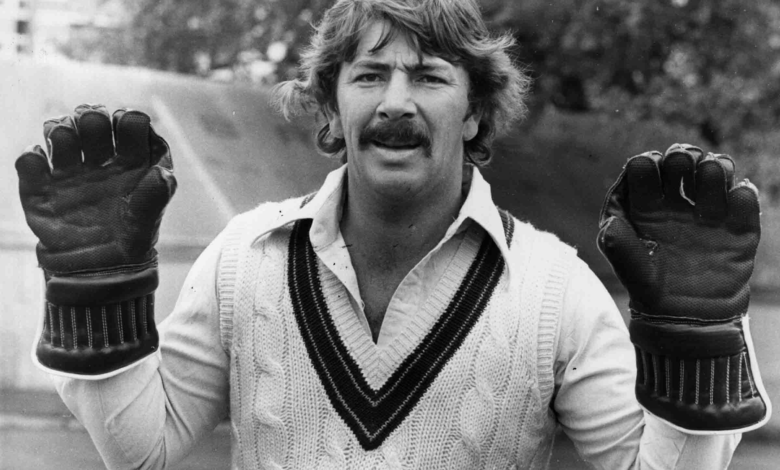
When you think about Australian cricket in the 1970s, one name stands out for his grit and incredible skills: Rod Marsh. He wasn’t just a player; he was the heartbeat of the team. Known for his thick mustache and his amazing ability to catch almost anything, Marsh changed how we look at wicketkeeping. He proved that a keeper could be a hero with both the gloves and the bat.
In this article, we will dive deep into the life of this sporting icon. We will look at his early struggles, his famous partnership with Dennis Lillee, and his massive impact on the game even after he retired. Whether you are a lifelong cricket fan or just learning about the sport, the story of Rod Marsh is one of hard work and ultimate success.
The Early Days and the “Iron Gloves” Nickname
Rod Marsh didn’t start his career as a perfect player. In fact, when he first joined the Australian team in 1970, many people were not happy. He replaced a popular keeper named Brian Taber. Because he dropped a few catches in his early games, the media gave him a mean nickname: “Iron Gloves.” They thought his hands were too stiff!
Instead of giving up, he worked harder than anyone else. He spent hours practicing his diving and catching. Soon, those “iron gloves” turned into magnets. He became so good that he could catch balls that seemed impossible to reach. This early struggle showed his true character. He was a fighter who never let criticism stop him from becoming the best.
The Iconic Partnership: Caught Marsh, Bowled Lillee
If there is one phrase that defines 70s cricket, it is “Caught Marsh, Bowled Lillee.” This wasn’t just a statistic; it was a nightmare for batsmen. Rod Marsh and fast bowler Dennis Lillee were like two halves of the same brain. They played together for Western Australia and the national team, developing a psychic connection.
In Test cricket alone, they combined for 95 wickets. This remains a world record for a bowler-wicketkeeper pair. When Lillee would run in to bowl a thunderbolt, Marsh already knew exactly where the ball would go. This legendary duo helped Australia dominate the world of cricket for over a decade. They even retired in the very same match in 1984!
A Pioneer for the Wicketkeeper-Batsman Role
Before Rod Marsh came along, most wicketkeepers were only expected to catch the ball. They usually batted near the bottom of the lineup and didn’t score many runs. But Marsh was different. He was a “swashbuckling” left-handed batter who loved to hit the ball hard. He was the first Australian wicketkeeper to ever score a Test century.
His batting was crucial for Australia. Many times, when the top players failed, Marsh would step up and save the game. He finished his career with three Test hundreds and sixteen half-centuries. Today, every team wants a “keeper-bat” like Adam Gilchrist, but it was Rod Marsh who truly started that trend.
Taking on the Thunderbolts of Jeff Thomson
Wicketkeeping isn’t just about skill; it’s about bravery. During the mid-1970s, Australia had the fastest bowling attack in the world. Rod Marsh had to stand behind the stumps while Jeff “Thommo” Thomson bowled at speeds over 160 km/h. It was dangerous and physically exhausting work.
Marsh often had to stand incredibly far back—sometimes halfway to the boundary! His hands were often bruised and bandaged, yet he never complained. Watching him dive across the slip cordon to grab a flying ball was one of the greatest sights in sports. He made the difficult job of keeping to express pace look like an art form.
The World Series Cricket Revolution
In the late 1970s, cricket changed forever with the start of World Series Cricket (WSC). Rod Marsh was one of the first big stars to sign up with Kerry Packer. This was a “rebel” league that introduced colored clothing, night matches, and better pay for players. It was a risky move, but Marsh believed players deserved more respect.
Even though he faced some backlash from the traditional cricket world, his performances in WSC were outstanding. He proved that he was still the best keeper in the world, regardless of the format. This era helped turn cricket into the professional, exciting sport we see on TV today.
Leadership and the “Song Master” Tradition
Rod Marsh was a leader in the dressing room. He was the man who started the famous Australian victory song, “Underneath the Southern Cross I Stand.” He would lead the team in singing it after every big win. This tradition is still alive today, with the role of “Song Master” being passed down through generations.
He was also known for his honesty. In 1981, during the famous “underarm bowling” incident, Marsh was seen shaking his head in disapproval. He told his captain it was a bad idea. This showed his deep respect for the spirit of the game. He was a “fair dinkum” Aussie who played hard but played fair.
A Second Career: Building Future Champions
After retiring from playing in 1984, Rod Marsh didn’t walk away from the sport. He became the head of the Australian Cricket Academy. He was a mentor to legendary players like Ricky Ponting, Glenn McGrath, and Shane Warne. He taught them not just how to play, but how to be “tough” cricketers.
Interestingly, he also helped the “old enemy.” He moved to England to run their academy and even became an England selector. He played a huge role in helping England win the 2005 Ashes. Later, he returned to Australia as the Chairman of Selectors. His eye for talent was unmatched in the cricketing world.
Honors and Inductions into the Hall of Fame
Because of his incredible service to the game, Rod Marsh received many awards. He was made a Member of the Order of the British Empire (MBE) in 1981. In 2009, he was one of the inaugural members inducted into the ICC Cricket Hall of Fame. These honors recognize him as one of the greatest athletes in history.
In his home state of Western Australia, there is even a stand named after him and Dennis Lillee at the WACA ground. This ensures that future generations will always remember the man who stood behind the stumps with such pride. His legacy is written in the record books and in the hearts of fans.
The Sudden Loss and Global Tributes
The cricket world was shocked and saddened when Rod Marsh passed away in March 2022 at the age of 74. He suffered a heart attack while attending a charity event. The outpouring of love from across the globe was enormous. Players from every country spoke about his kindness, his wit, and his incredible talent.
Even though he is gone, his influence remains. Whenever a young keeper dives to take a spectacular catch or a lower-order batter hits a match-winning century, they are following in the footsteps of “Bacchus.” He was a true giant of the game who left it better than he found it.
Why Rod Marsh Will Always Be a Legend
So, why do we still talk about Rod Marsh today? It’s because he represented the best of the Australian spirit. He was rugged, talented, and fiercely loyal to his teammates. He turned a “boring” position like wicketkeeping into a starring role that kids wanted to emulate.
From the “Iron Gloves” to the “Golden Gloves,” his journey is a lesson in perseverance. He showed us that you can overcome a bad start if you have the heart to keep going. Rod Marsh wasn’t just a cricketer; he was a symbol of an era where the game was played with passion and a thick mustache!
Conclusion: A Legacy That Never Fades
In conclusion, Rod Marsh was a pioneer who redefined the role of the wicketkeeper-batsman. His partnership with Dennis Lillee became the stuff of legends, and his work as a coach shaped the future of Australian and English cricket. He was a man of integrity who always put the game first. His records might eventually be broken, but his impact on the culture of cricket will last forever. We should all remember him as the man who made the baggy green shine a little brighter.
Frequently Asked Questions (FAQs)
1. How many Test dismissals did Rod Marsh have? He finished his career with 355 dismissals in 96 Test matches. At the time of his retirement, this was a world record.
2. Why was he called “Iron Gloves”? Early in his career, he dropped several catches, leading critics to joke that his hands were made of iron. He later proved them wrong by becoming one of the most reliable keepers in history.
3. Did Rod Marsh ever score a century? Yes! He was the first Australian wicketkeeper to score a Test century. He finished his career with three Test centuries in total.
4. What was the “Caught Marsh, Bowled Lillee” record? This refers to the 95 times that Dennis Lillee took a wicket where Rod Marsh caught the ball. It is the most successful bowler-keeper partnership in Test history.
5. What did Rod Marsh do after retiring from cricket? He became a highly successful coach and administrator. He ran cricket academies in Australia, England, and Dubai, and served as the Chairman of Selectors for Australia.